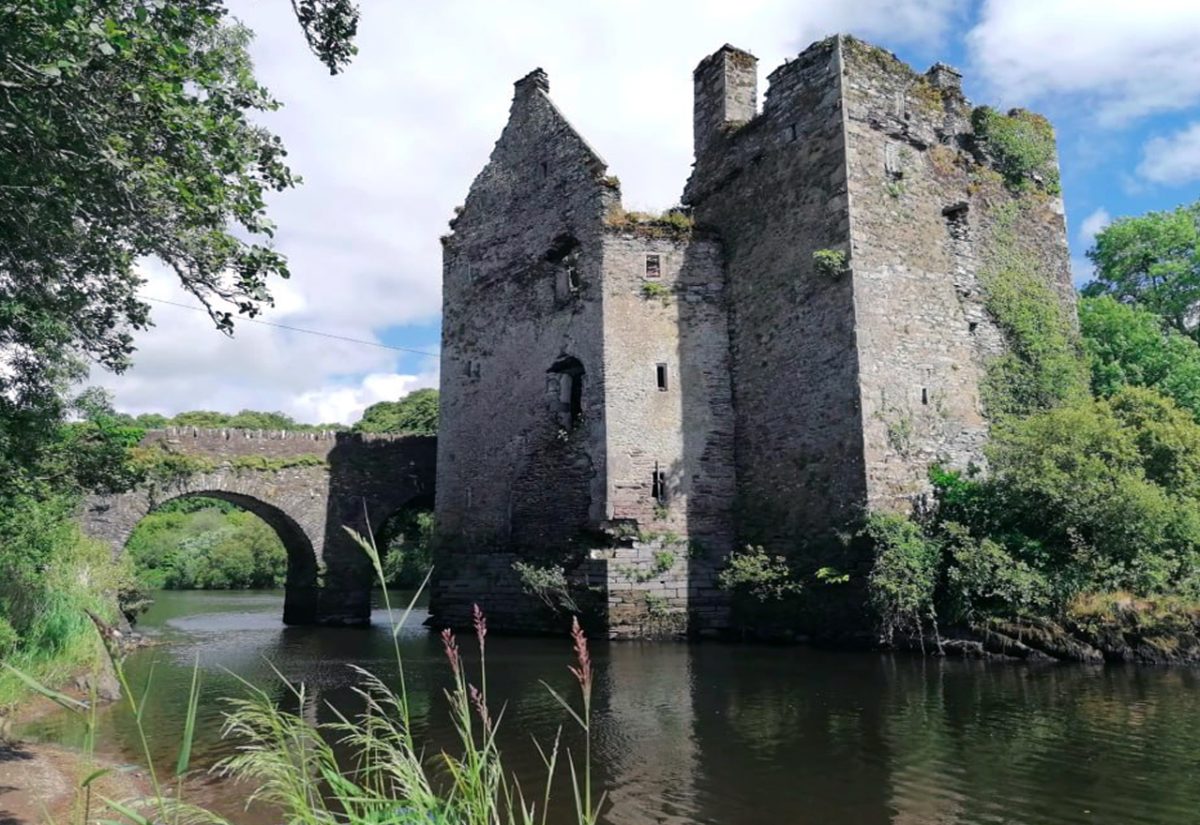
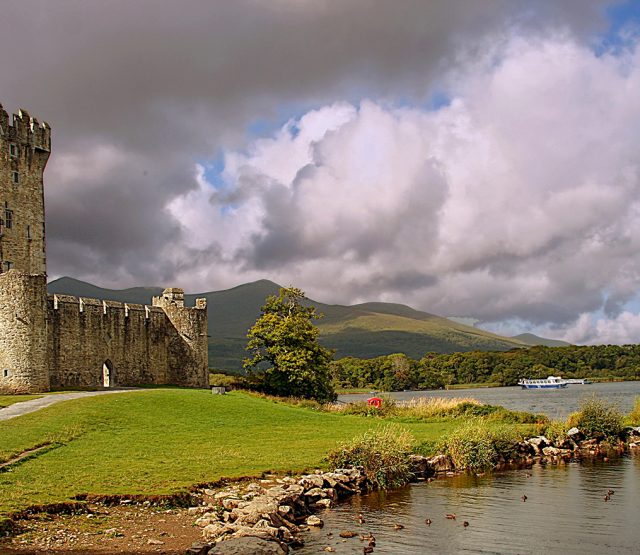
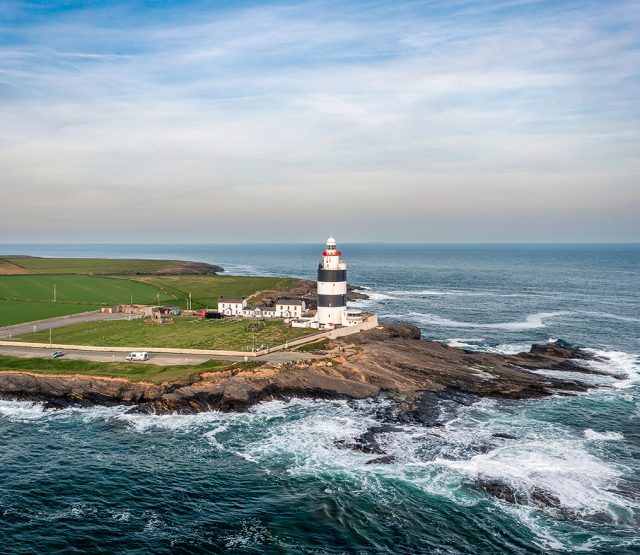
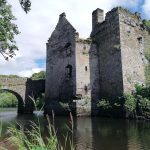
This amazing castle is located on the River Lee, approximately 30 km upstream from Cork City. Only ruins remain, and it’s impossible to enter, but it’s impressive, and the surroundings are beautiful.
An information plaque tells the castle’s story:
“Carrigadrohid Castle stands on a rock in the middle of the River Lee. It was built by the famous princely McCarthys of Muskerry, who were at one time, Kings of Munster and later Lords of the Barony. In the 15th century, the castle was fortified and occupied by Cormac McCarthy and his wife Sabila O’Carroll. A century later, Cormac McTeigh and his wife, Joan Butler, held and lived in the fortress. In 1583, Cormac died suddenly, leaving Joan in possession of the castle.
On the 10th of May 1650, Bishop MacEgan, a native of Duhallow and Bishop of Ross, having been captured by Cromwell’s General, was promised his freedom if he would persuade the garrison in Carrigadrohid Castle to surrender. MacEgan urged the garrison to fight to the end. His words to the men were … “Hold out to the last for religion and country”. Then he was hanged on a nearby tree with the reins of his horse. The defenders could see the terrible happening from the top of the castle.
After many years, the Bowens acquired Carrigadrohid Castle and came to live there. This Welsh family settled in Ireland during the mid-17th century, when Henry was granted land in North Cork and devised the Bowenscourt Estate, birthplace of a later Henry, father of the well-known writer Elizabeth Bowen.
In the early 19th century, the Bowens of Carrigadrohid abandoned the castle, having built a new manor house at nearby Oakgrove.”
When you book a Tour in Ireland or a Day Tour Carrigadrohid Castle with Wonderway, these layers of stress are removed, ensuring that your experience is memorable for all the right reasons.
Wonderway.uk Crafting picturesque, soul-stirring journeys across the UK for over three years — thoughtfully tailored, deeply local, and designed to reconnect you with the beauty, history, and rhythm of the land.